
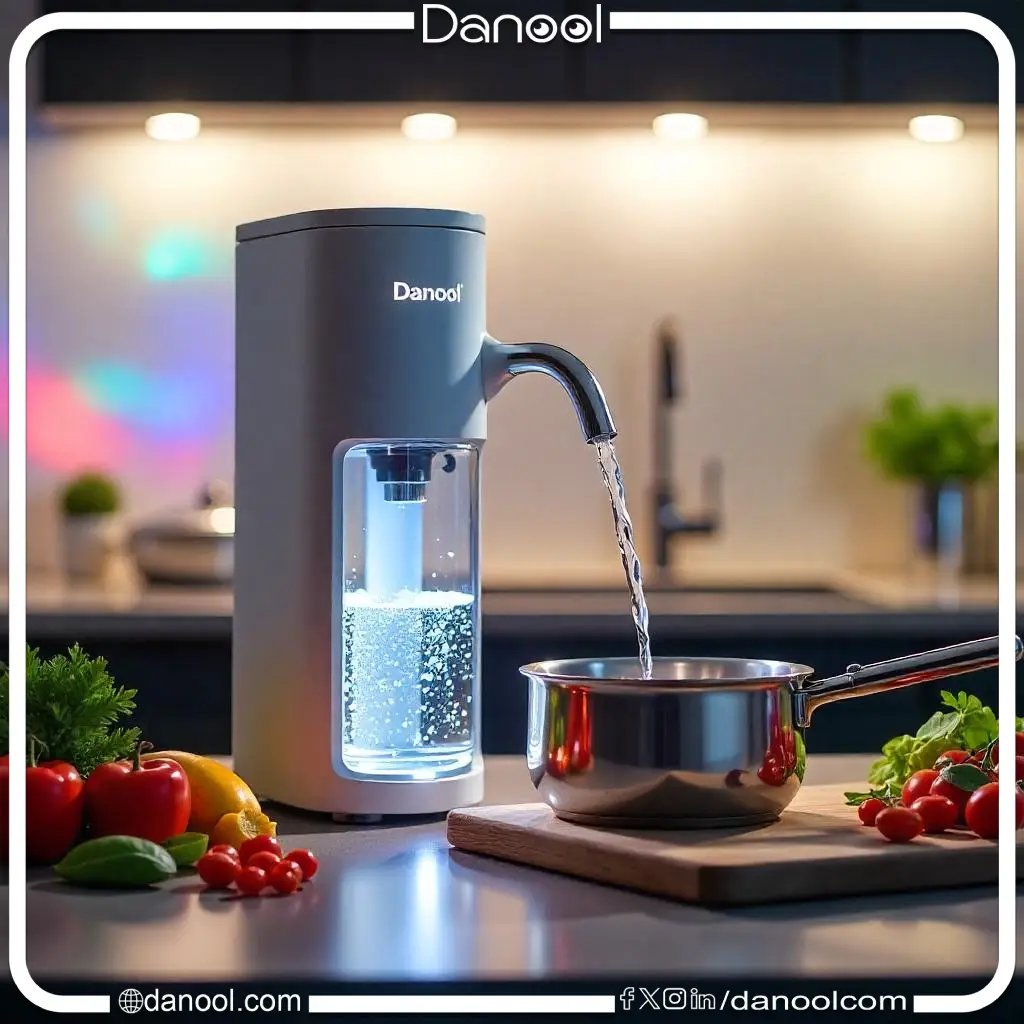
Pure water is one of the most important elements affecting the quality of cooking and the health of family members. Using household water filters provides a practical solution to improve water quality and ensure water safety. In this article, we will address the importance of home water filters for healthy cooking, their various benefits, and provide a comparison of the types of filters and their costs to help you choose the most appropriate one.
First: Why do we need clean water in cooking?
- Improved cooking quality:
Pure water adds a distinctive natural flavor to food and beverages, while contaminated water may adversely affect taste and smell. - Protect public health
Unfiltered water may contain impurities, bacteria, and parasites that may cause diseases such as diarrhea and gastrointestinal infections. - Reduce Sediment Accumulation:
Water filled with salts and minerals leads to the accumulation of sediments in pots and cooking appliances, reducing their efficiency and shelf life.
Second: The Benefits of Domestic Water Filters for Healthy Cooking
- Removal of contaminants and impurities:
Filters help get rid of solid deposits, heavy metals, and bacteria, making water safe and healthy. - Improving the quality of beverages:
When using filtered water, beverages such as tea and coffee are clearer and more flavorful. - Reduce power.
Pure water heats up quickly, reducing cooking time and energy consumption. - Reducing long-term costs:
Buying a water filter reduces the need to buy bottled water and protects the environment from plastic pollution.

Third: Comparison between types of household water filters and their costs
| Filter type | The working method | Advantages | Disadvantages | Approximate cost |
|---|---|---|---|---|
| Active carbon filter | Eliminates chlorine and organic impurities | Improves taste and aroma, economical | Does not remove salts and heavy metals | Low UPU |
| Reverse osmosis (RO) | Removes salts, heavy metals and small pollutants | Purifies water to a very high degree | Consumes large amounts of water | Medium to high |
| Ultraviolet (UV) | Kills bacteria and parasites using UV rays | Effective against microorganisms | Does not remove solid impurities or salts | متوسطة |
| multistage | Combines multiple technologies such as carbon and reverse osmosis | Provides thorough purification, significantly improves water quality | Relatively expensive and requires regular maintenance | Extreme |
Fourth: Tips for Choosing the Right Filter
- Identify your needs:
Conduct a water analysis to determine the type of contaminants you need to dispose of. - Plan your budget
Choose a filter that fits your daily needs and budget. - Easy installation and maintenance:
Choose a filter that is easy to maintain and does not require a high maintenance cost. - Kitchen Compatibility:
Ensure that the filter size is suitable for the kitchen space and does not hinder the use of other appliances.
conclusion
Using home water filters for cooking is not just an improvement in food quality, it is an investment in family health and quality of life. Choosing the right filter depends on your individual needs and budget. Ensure that the filter is regularly serviced to ensure that it remains effective and that you enjoy clean and healthy water daily.